


Genomic DNA Cleanup
Purify and concentrate your extracted DNA and RNA with our comprehensive selection of cleanup and purification kits. Remove contaminants, PCR inhibitors, salts, enzymes, and other impurities that interfere with downstream applications. Our column-based cleanup systems deliver high-quality, concentrated nucleic acids ready for sequencing, cloning, qPCR, and other molecular analyses. Recover your valuable samples with high yield and purity for reliable, reproducible results in water quality research and diagnostics.
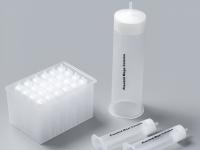
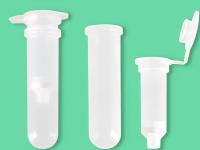
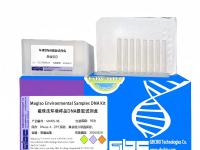
Extraction Technology Comparison
Column-Based Extraction Method
Traditional silica membrane technology for versatile nucleic acid isolation:
- Technology Principle - DNA/RNA binds to silica membrane in high-salt (chaotropic) conditions | Contaminants wash through membrane | Nucleic acids elute in low-salt buffer or water | Centrifugation-driven flow through columns
- Processing Format - Individual spin columns in 2 mL collection tubes | Process 1-24 samples simultaneously | Manual pipetting and centrifugation steps | Typical processing time: 30-60 minutes for 12 samples
- Sample Input Range - Bacterial cultures: 1-10 mL (10⁶-10⁹ cells) | Environmental water: 100 mL-10L (after filtration) | Biofilm samples: 10-100 mg | Flexible input volumes accommodate diverse sample types
- Yield & Purity - DNA yield: 5-50 µg (depending on sample biomass) | RNA yield: 10-60 µg total RNA | Purity: A260/280 = 1.7-2.0 (DNA), 2.0-2.2 (RNA) | A260/230 = 2.0-2.3 | High molecular weight DNA >50 kb
- Recovery Efficiency - 80-95% recovery for most DNA fragments >100 bp | 85-95% recovery for RNA >200 nucleotides | Consistent performance across replicates (CV <5%)
- Advantages - Lower initial equipment cost (only centrifuge required) | Flexible protocols easily adapted to different sample types | Visual monitoring of each extraction step | Individual sample processing prevents cross-contamination | Widely validated in published methods | Ideal for method development and diverse applications
- Limitations - Moderate throughput (12-24 samples/run practical maximum) | Higher hands-on time (15-20 min per batch) | Repetitive pipetting can cause operator fatigue | Centrifuge required (not all labs have high-speed capacity) | Difficult to fully automate | Requires proper technique to ensure reproducibility
- Best Applications - Small to medium-sized laboratories (1-50 samples/day) | Research and method development requiring flexibility | Diverse sample types requiring protocol modifications | Laboratories without automation infrastructure | Educational and training settings | Projects with limited budget
Magnetic Bead-Based Extraction Method
Advanced paramagnetic particle technology for high-throughput automation:
- Technology Principle - DNA/RNA binds to paramagnetic particles (beads) in high-salt conditions | Magnetic field captures bead-nucleic acid complexes | Wash solutions remove contaminants while beads remain magnetically held | Nucleic acids elute in low-salt buffer | No centrifugation required
- Bead Characteristics - Superparamagnetic core (iron oxide) coated with silica or polymer | Bead size: 200-500 nm diameter (optimal for DNA binding) | High surface area-to-volume ratio | Uniform bead distribution ensures consistent binding | Rapid magnetic response time (<30 seconds)
- Processing Format - 96-well or 384-well microplates | Compatible with manual magnetic separators or automated liquid handlers | Single-tube workflow (all steps in one well) | Typical processing time: 25-40 minutes for 96 samples (automated)
- Sample Input Range - Bacterial cultures: 0.5-5 mL (10⁶-10⁹ cells) | Environmental water: 100 mL-10L (after filtration) | Biofilm samples: 10-50 mg | Scalable from single samples to full plates
- Yield & Purity - DNA yield: 5-50 µg per reaction | RNA yield: 10-60 µg total RNA | Purity: A260/280 = 1.8-2.1 (DNA), 2.0-2.2 (RNA) | A260/230 = 2.0-2.5 | Binding capacity: 20-50 µg DNA per 50 µL bead slurry
- Recovery Efficiency - 85-95% recovery for DNA >100 bp | 88-95% recovery for RNA >200 nt | Bead recovery >95% during magnetic separation | Excellent reproducibility (CV <3% for automated protocols)
- Advantages - High throughput (96-384 samples in single run) | Minimal hands-on time (5-10 min manual, 2 min automated setup) | Automation-compatible with any liquid handling platform | No centrifugation required | Reduced cross-contamination risk (closed system) | Scalable from 1 to 384 samples | Lower elution volumes (30-100 µL) for concentrated DNA/RNA | Faster magnetic separation than centrifugation | Easier to standardize across labs
- Limitations - Higher per-sample reagent cost (15-30% more than columns) | Requires magnetic separator equipment (manual racks or robots) | Initial investment for automation systems ($10K-$200K) | Less flexible for protocol customization | Bead carryover can occur if separation incomplete | Room temperature storage required for some bead formulations
- Best Applications - High-throughput laboratories (>50 samples/day) | Surveillance programs requiring standardized protocols | Facilities with liquid handling automation | Large-scale environmental monitoring projects | Wastewater-based epidemiology (100+ samples/week) | Clinical water testing with rapid turnaround needs | Laboratories prioritizing reproducibility and traceability
Method Selection Comparison
| Feature | Column-Based Method | Magnetic Bead Method |
|---|---|---|
| Throughput | Low-Medium (1-24 samples) | High (96-384 samples) |
| Processing Time | 30-60 min (manual) | 25-40 min (automated) 35-50 min (manual) |
| Hands-On Time | 15-20 min per batch | 5-10 min (manual) 2-5 min (automated) |
| Automation Capability | Limited (requires specialized systems) | Excellent (any liquid handler) |
| DNA Yield | 5-50 µg | 5-50 µg |
| DNA Purity | A260/280 = 1.7-2.0 A260/230 = 2.0-2.3 |
A260/280 = 1.8-2.1 A260/230 = 2.0-2.5 |
| Recovery Rate | 80-95% | 85-95% |
| Reproducibility (CV) | 3-7% (operator dependent) | 2-4% (especially when automated) |
| Equipment Required | Centrifuge (13,000-16,000 × g) Heat block (optional) Vortex mixer |
Magnetic separator (manual or automated) Plate shaker/mixer Liquid handler (optional) |
| Initial Equipment Cost | Low ($2K-$10K for centrifuge) | Moderate-High Manual: $500-$2K Automated: $10K-$200K |
| Reagent Cost per Sample | $3-$8 | $4-$10 |
| Labor Cost per Sample | Higher (more hands-on time) | Lower (minimal hands-on) Lowest when automated |
| Scalability | Moderate (limited by centrifuge capacity) | Excellent (96-384 well formats) |
| Protocol Flexibility | High (easy to modify steps) | Moderate (standardized protocols preferred) |
| Cross-Contamination Risk | Low-Moderate (good technique required) | Very Low (closed system, minimal handling) |
| Elution Volume Options | 30-200 µL (highly flexible) | 30-100 µL (concentrated output) |
| Best For | Small-medium labs Method development Diverse sample types Limited budgets Teaching/training |
High-throughput labs Standardized protocols Automation-equipped facilities Surveillance programs Quality-focused operations |
DNA Extraction Applications
Bacterial DNA Extraction
Isolate high-quality genomic DNA from pure bacterial cultures:
- Sample Input - 1-5 mL overnight bacterial culture (10⁸-10⁹ cells/mL) | Pellet cells by centrifugation before lysis
- Lysis Methods - Enzymatic lysis (lysozyme for Gram-positive) | Chemical lysis (detergents, chaotropic salts) | Mechanical lysis (bead-beating for tough cell walls) | Heat lysis (95-100°C for rapid protocols)
- Expected Yield - 10-30 µg high molecular weight DNA (>50 kb) | Column method: 15-25 µg | Magnetic beads: 10-30 µg
- Applications - 16S rRNA gene sequencing | Whole genome sequencing (Illumina, PacBio, Nanopore) | Bacterial strain identification | MLST (multi-locus sequence typing) | Plasmid profiling
Environmental Water DNA Extraction
Extract microbial community DNA from diverse water matrices:
- Sample Preparation - Filter 100 mL-10L water through 0.22 µm membrane | Extract DNA directly from membrane | Alternative: Centrifuge to pellet biomass (wastewater)
- Special Considerations - Enhanced lysis required for diverse microorganisms | Critical to remove PCR inhibitors (humic acids, heavy metals) | Inhibitor removal protocols integrated into extraction
- Expected Yield - Drinking water: 2-10 µg DNA (low biomass) | Surface water: 5-30 µg DNA | Wastewater: 10-50 µg DNA (high biomass) | Biofilm: 5-25 µg DNA
- Purity Challenges - Environmental samples contain PCR inhibitors | Specialized extraction chemistry removes >95% of inhibitors | A260/230 ratio critical indicator (should be >2.0)
- Applications - Microbial community profiling (16S/18S metagenomics) | Pathogen detection (qPCR for Legionella, Cryptosporidium) | Antibiotic resistance gene monitoring | Wastewater-based epidemiology | Environmental DNA (eDNA) biodiversity studies
Genomic DNA for Sequencing
High molecular weight DNA for long-read sequencing platforms:
- Quality Requirements - DNA fragment size >50 kb (PacBio HiFi) or >100 kb (Nanopore) | Minimal shearing during extraction | A260/280 = 1.8-2.0, A260/230 >2.0 | Free from protein and salt contamination
- Method Selection - Column-based: Suitable for most applications, DNA >50 kb | Magnetic beads: Excellent for high molecular weight DNA >100 kb | Both methods preserve long DNA if handled gently
- Sample Handling Tips - Avoid vortexing (use gentle inversion) | Wide-bore pipette tips for viscous DNA solutions | Minimize freeze-thaw cycles | Elute in TE buffer for long-term storage
- Applications - Bacterial de novo genome assembly | Complete chromosome and plasmid assembly | Structural variant detection | Long-range haplotype phasing
RNA Extraction Applications
Bacterial Total RNA Extraction
Isolate high-quality RNA for gene expression and transcriptomics:
- Sample Input - 1-5 mL bacterial culture (10⁷-10⁹ cells/mL) | Harvest cells at exponential or stationary phase | Immediate lysis or stabilization required (RNAlater)
- Critical Considerations - RNA is extremely labile (RNase contamination destroys samples) | Work quickly and keep samples on ice | Use RNase-free reagents, tips, and tubes | Dedicated pipettes for RNA work
- Expected Yield - 10-50 µg total RNA per extraction | rRNA comprises 80-90% of total RNA | mRNA is 1-5% of total RNA | Small RNA (<200 nt) is 10-15%
- Quality Metrics - RIN (RNA Integrity Number) >8.0 required for RNA-seq | A260/280 = 2.0-2.2 | A260/230 = 2.0-2.5 | Genomic DNA contamination <0.1%
- DNase Treatment - On-column DNase digestion removes genomic DNA | Essential for RT-qPCR applications | Post-extraction DNase treatment alternative | Verify DNA removal by PCR (no-RT control)
- Applications - RT-qPCR gene expression analysis | RNA-seq transcriptomics | Metatranscriptomics (active microbial community function) | Small RNA profiling | Bacterial stress response studies
Environmental RNA Extraction
Extract RNA from complex environmental matrices:
- Sample Preparation - Filter water samples (0.22 µm, 100 mL-2L) | Immediate preservation (RNAlater or flash freeze -80°C) | RNA degrades rapidly without stabilization
- Challenges - Low biomass in drinking water | High inhibitor content in wastewater | Environmental RNases degrade RNA quickly | Diverse organisms require enhanced lysis
- Expected Yield - Environmental water: 5-30 µg total RNA | Wastewater: 10-50 µg total RNA | Biofilm: 10-40 µg total RNA
- Applications - Metatranscriptomics (active community function) | Viral surveillance in wastewater (SARS-CoV-2, norovirus) | Algal toxin gene expression | Antibiotic resistance gene expression | Microbial activity assessment
Viral RNA Extraction
Isolate RNA from waterborne viruses for detection and surveillance:
- Sample Preparation - Concentrate viruses by ultrafiltration or PEG precipitation | Sample input: 200 µL to 10 mL concentrated sample | Carrier RNA added to improve recovery of low viral titers
- Expected Yield - 1-15 µg RNA (depending on viral load) | Yield correlates with viral titer in sample | Wastewater has higher viral loads than surface water
- Method Advantages - Column-based: Good for small sample numbers, flexible protocols | Magnetic beads: High-throughput for surveillance programs, automated processing
- Applications - Wastewater-based epidemiology (COVID-19, polio) | Drinking water viral safety monitoring | Norovirus outbreak investigations | Enterovirus surveillance | Hepatitis A virus detection
Extraction Method Workflow
Column-Based Extraction Workflow
Step 1: Sample Lysis - Add lysis buffer to sample | Enzymatic, chemical, or mechanical lysis | Incubate 5-30 min (temperature varies)
Step 2: Binding - Add binding buffer or ethanol | Apply to spin column | Centrifuge 1 min (DNA/RNA binds to membrane)
Step 3: Washing - Add wash buffer (2-3 wash steps) | Centrifuge to remove contaminants | Optional: Dry spin to remove residual ethanol
Step 4: Elution - Add elution buffer (30-200 µL) | Incubate 1-2 min | Centrifuge to collect purified DNA/RNA
Total Time: 30-60 minutes for 12-24 samples
Magnetic Bead Workflow
Step 1: Sample Lysis - Add lysis buffer to sample in 96-well plate | Enzymatic or chemical lysis | Incubate 5-30 min with shaking
Step 2: Binding - Add magnetic beads to lysate | Incubate 5-10 min (DNA/RNA binds to beads) | Apply magnet, remove supernatant
Step 3: Washing - Add wash buffer while beads held by magnet | Mix and separate (2-3 wash steps) | Remove all liquid
Step 4: Elution - Add elution buffer (30-100 µL) | Incubate 2-5 min | Separate beads, transfer eluate
Total Time: 25-40 minutes for 96 samples (automated) or 35-50 min (manual)
Equipment Requirements
Column-Based Equipment
Essential Equipment:
• Microcentrifuge (13,000-16,000 × g)
• Vortex mixer
• Heat block or water bath (37-95°C)
• Pipettes (2-20 µL, 20-200 µL, 100-1000 µL)
• Ice bucket or cold block
Optional:
• Bead-beater for tough cell walls
• Refrigerated centrifuge (RNA work)
Magnetic Bead Equipment
Essential Equipment:
• Magnetic separator (96-well plate format)
• Plate shaker or mixer
• Multichannel pipettes or liquid handler
• Heat block or thermocycler (96-well)
• Plate centrifuge (for mixing)
Optional:
• Automated liquid handler ($10K-$200K)
• Integrated magnetic bead processor
Sample Preparation Equipment
Vacuum filtration manifolds (12-24 positions). Membrane filters (0.22 µm, cellulose or PVDF). Peristaltic pumps for large volume filtration. Centrifuge for pelleting cells from culture. Bead-beating homogenizer for tough samples.
Quality Control Equipment
Spectrophotometer (NanoDrop) for quantification. Fluorometer (Qubit) for accurate low-concentration measurement. Gel electrophoresis for DNA integrity. Bioanalyzer or TapeStation for RNA integrity (RIN). qPCR for DNA copy number quantification.
Applications by Water Sample Type
| Water Type | Recommended Method | Sample Preparation | Expected Yield |
|---|---|---|---|
| Drinking Water (Low Biomass) | Column-based (flexible) or Magnetic beads (automation) | Filter 0.5-5L water through 0.22 µm membrane; extract from filter | 2-10 µg DNA |
| Wastewater (Municipal) | Magnetic beads (high-throughput) or Column-based (small scale) | Filter 100-500 mL through 0.22 µm; enhanced lysis buffer needed | 10-40 µg DNA |
| Bacterial Pure Cultures | Column-based (standard) or Magnetic beads (automation) | 1-5 mL overnight culture (10⁸-10⁹ cells/mL); pellet by centrifugation | 10-30 µg DNA |
| Biofilm Samples | Column-based (enhanced lysis) | Scrape 10-50 mg biofilm; bead-beating lysis recommended | 5-25 µg DNA |
| Surface Water (Rivers, Lakes) | Column-based or Magnetic beads (project scale dependent) | Filter 1-5L through 0.22 µm; inhibitor removal critical | 5-30 µg DNA |
| Viral Surveillance (Wastewater) | Magnetic beads (high-throughput surveillance) or Column (research) | Concentrate viruses by ultrafiltration; 200 µL-10 mL input | 1-15 µg RNA |
| Algae/Cyanobacteria | Column-based (enhanced lysis for cell walls) | Collect 100-500 mg algal biomass by filtration; bead-beating or liquid nitrogen | 10-50 µg RNA/DNA |
Method Selection Decision Tree
Choose Column-Based Extraction If:
• Processing <50 samples per day
• Need maximum flexibility for different sample types
• Limited budget for initial equipment ($5K-$15K)
• Diverse applications requiring protocol customization
• Method development or research projects
• Small to medium-sized laboratory
• No automation infrastructure available
• Visual control over each extraction step preferred
• Educational or training environment
Choose Magnetic Bead Extraction If:
• Processing >50 samples per day consistently
• High-throughput surveillance or monitoring programs
• Have access to liquid handling automation
• Need standardized, reproducible protocols
• Want to minimize hands-on time and labor costs
• Require 96-384 sample processing capability
• Prioritize reproducibility and traceability
• Plan to scale operations in the future
• Clinical or regulatory applications with strict QC
Why Choose Our DNA/RNA Extraction Solutions?
Technology Flexibility
Access to both proven column-based and innovative magnetic bead methods. Choose the right technology for your throughput needs. Transition seamlessly from manual to automated workflows. Compatible protocols across both platforms. Support for method transfer and validation.
Optimized for Water Samples
Specialized protocols for environmental water matrices. Efficient removal of PCR inhibitors (humic acids, heavy metals). High recovery from low-biomass samples (drinking water). Validated for diverse water types (drinking, wastewater, surface, groundwater). Compatible with all downstream applications (qPCR, sequencing).
Proven Performance
Validated for EPA, ISO, and APHA Standard Methods. High recovery rates (80-95%) with excellent reproducibility. Consistent purity (A260/280, A260/230 ratios). Published in peer-reviewed water quality research. Successfully deployed in accredited laboratories across CPTPP nations.
Comprehensive Technical Support
Free consultation on method selection and optimization. Protocol customization for unique water types. Troubleshooting assistance for low yields or purity issues. Method validation support for accredited laboratories. Training workshops on best practices. Access to applications scientists.
Quality Assurance
ISO 13485 certified manufacturing. Lot-specific certificates of analysis provided. No detectable DNase/RNase contamination. Sterile, single-use components. Compatible with GLP/GMP requirements. Third-party proficiency testing participation. Rigorous QC of every production lot.
Scalable Solutions
Start with column-based for method development. Scale to magnetic beads for high-throughput. Modular approach grows with your laboratory. Training and support through transition phases. Compatible with most liquid handling platforms. Future-proof investment in extraction technology.
Need Help Choosing?
Our applications scientists have decades of combined experience in environmental Sample analysis. Contact us with your specific requirements.