


PFAS Detection
Detect and quantify per- and polyfluoroalkyl substances (PFAS) in water with state-of-the-art LC-MS/MS and Q-TOF mass spectrometry analysis. Our facilities in Korea, Singapore, and China deliver ultra-sensitive detection of legacy and emerging PFAS compounds at sub-ng/L concentrations. From PFOA and PFOS to GenX and ultra-short chain PFAS, our comprehensive screening services address the "forever chemicals" crisis in drinking water, wastewater, surface water, and groundwater monitoring programs across industrial sites, airports, military bases, and municipal water supplies.
Understanding PFAS Contamination
The "Forever Chemicals" Crisis
Why PFAS are among the most concerning water contaminants globally:
- What are PFAS? - Per- and polyfluoroalkyl substances: synthetic chemicals with carbon-fluorine bonds | >12,000 different PFAS compounds identified | Characterized by extreme persistence (C-F bond among strongest in chemistry) | "Forever chemicals" - do not break down in the environment | Classified as long-chain (≥6 carbons for PFCA, ≥8 for PFSA) or short-chain (<6 or <8 carbons) | Legacy PFAS (PFOA, PFOS) vs. replacement PFAS (GenX, ADONA, F-53B)
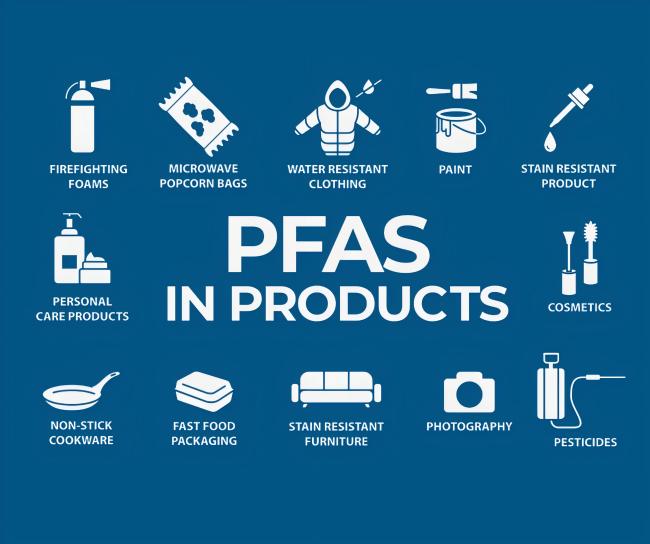
- Sources of Contamination - Aqueous film-forming foam (AFFF) at airports, military bases, fire training sites | Industrial manufacturing (fluoropolymers, electronics, textiles) | Wastewater treatment plant effluent (household products, consumer goods) | Landfill leachate (degradation of PFAS-containing products) | Biosolids application to agricultural land | Food packaging (grease-resistant paper, microwave popcorn bags) | Non-stick cookware manufacturing | Stain-resistant textiles and carpet treatments | Chrome plating and metal finishing operations
- Environmental Fate & Transport - Extremely mobile in groundwater (anionic PFAS not adsorbed to soils) | Long-range atmospheric transport (volatile precursors) | Bioaccumulation in aquatic organisms and food chains | No biodegradation under environmental conditions | Photolysis only for certain precursors | Persist for decades to centuries in environment | Groundwater plumes extend miles from source areas
- Human Health Concerns - Liver damage and elevated liver enzymes | Thyroid disease and hormone disruption | Increased cholesterol levels | Decreased vaccine response in children | Pregnancy-induced hypertension and preeclampsia | Increased risk of kidney and testicular cancer | Developmental effects (low birth weight, delayed puberty) | Immune system suppression | Extremely long half-lives in human body (PFOA: 2-4 years, PFOS: 5-7 years) | Exposure primarily through contaminated drinking water and food
- Ecological Impacts - Bioaccumulation in fish, wildlife (blood levels 1,000× higher than water) | Reproductive and developmental toxicity in aquatic organisms | Biomagnification through food webs | Impacts on bird reproduction (eggshell thinning) | Mammalian wildlife health effects | Disruption of aquatic ecosystems
- Regulatory Landscape - US EPA Final Drinking Water Regulations (2024): PFOA 4 ng/L (ppt), PFOS 4 ng/L, PFNA 10 ng/L, PFHxS 10 ng/L, combined limit for mixtures | EU Drinking Water Directive: Total PFAS 100 ng/L, PFAS-20 (sum of 20 compounds) 500 ng/L | State-specific limits (e.g., Michigan, New Jersey, California) more stringent: 2-10 ng/L | WHO developing guidelines | Rapidly evolving regulations globally | Monitoring requirements expanding to airports, military sites, industrial facilities | Class action lawsuits driving remediation efforts
PFAS-Specific Analytical Challenges
Why PFAS Analysis Requires Specialized Methods
Unique analytical considerations for ultra-trace PFAS quantification:
- Ubiquitous Background Contamination - PFAS present in laboratory air, reagents, equipment, consumables | Standard HPLC/MS systems contaminated from PTFE tubing, seals, pump components | "PFAS-free" laboratory setup essential: stainless steel HPLC, PEEK tubing, no fluoropolymers | Field and laboratory blanks critical for QC | Background levels often 0.5-5 ng/L even in "clean" systems
- Sample Preparation Challenges - Traditional C18 SPE inadequate (PFAS breakthrough, poor recovery) | Weak anion exchange (WAX) SPE required for anionic PFAS | Special sorbents for zwitterionic PFAS (e.g., FOSAA, 6:2 FtTAoS) | Large sample volumes needed (250 mL-1L) for sub-ng/L detection | Matrix effects from dissolved organic carbon, particulates | Cannot use standard plastic labware (leaches PFAS) | Glass or polypropylene containers only
- Chromatographic Separation - Requires PFAS-free LC system (no PTFE, fluoropolymer components) | Guard column necessary to delay contamination | C18 columns specifically screened for low PFAS background | Isomeric separation challenging (linear vs. branched PFAS) | Wide polarity range (short-chain to long-chain PFAS) requires gradient optimization | Ultra-short chain PFAS (C2-C3) poorly retained on C18
- Mass Spectrometry Detection - Negative electrospray ionization (ESI-) primary mode | Triple quadrupole MS/MS (targeted quantification) or Q-TOF (non-targeted screening) | Multiple reaction monitoring (MRM) for each PFAS (precursor → product ion transitions) | Isotope-dilution method essential (13C-labeled internal standards for each analyte) | Matrix suppression/enhancement requires matrix-matched calibration or standard addition | Detection limits: 0.5-5 ng/L (triple quad), 0.1-2 ng/L (high-sensitivity instruments)
- Quality Control Requirements - Isotope-labeled internal standards for every target PFAS (expensive but essential) | Matrix spike/matrix spike duplicate (MS/MSD) each batch | Laboratory reagent blank (LRB) and field blank every batch | Continuing calibration verification (CCV) every 10 samples | Performance evaluation samples from independent source | Rigorous documentation and audit trail
PFAS-Specific SPE Methods
Specialized Extraction for Comprehensive PFAS Recovery
Critical sample preparation strategies for diverse PFAS compound classes:
Weak Anion Exchange (WAX) SPE
Cartridge: Oasis WAX (6 cc, 150 mg or 500 mg sorbent)
Mechanism: Mixed-mode reversed-phase + anion exchange, retains anionic PFAS (PFCA, PFSA, sulfonates)
Conditioning: 4 mL 0.1% NH₄OH in methanol → 4 mL methanol → 4 mL water
Loading: 250 mL-1L water sample at 1-2 drops/second (slow flow critical)
Washing: 4 mL 25 mM sodium acetate buffer (pH 4) - removes salts, retains PFAS
Elution: 4 mL methanol → 4 mL 0.1% NH₄OH in methanol (basic conditions release anionic PFAS)
Concentration: Evaporate to 1 mL under gentle nitrogen stream (40°C max)
Target Compounds: PFCA (PFBA to PFDoDA), PFSA (PFBS to PFDS), 6:2 FtS, 8:2 FtS, HFPO-DA (GenX), ADONA
Recovery: 70-120% for most PFAS, lower for ultra-short chain (PFBA, PFPeA: 50-80%)
Advantages: EPA Method 537.1 validated, broad PFAS coverage, handles high-ionic strength samples
EnviCarb/WAX Dual-Layer SPE
Cartridge: Supelco EnviCarb (graphitized carbon black) layered above Oasis WAX
Mechanism: EnviCarb removes DOC/humic substances (reduce matrix effects), WAX retains PFAS
Conditioning: 5 mL methanol → 10 mL 1% NH₄OH → 5 mL methanol → 10 mL water
Loading: 250 mL-1L sample at slow flow rate
Washing: 8 mL 25 mM sodium acetate buffer
Elution: 4 mL methanol followed by 8 mL 0.1% NH₄OH in methanol
Target Compounds: Full PFAS range including ultra-short chain, zwitterionic PFAS (FOSAA, EtFOSAA)
Recovery: 60-110% across wide PFAS range
Advantages: Cleaner extracts (less matrix interference), better for high-DOC samples (surface water, wastewater), improved MS sensitivity
Note: More expensive, longer processing time than WAX alone
Zwitterionic PFAS Extraction
Special Challenge: Zwitterionic PFAS (e.g., FOSAA, perfluoroalkyl betaines) have both positive and negative charges
Cartridge: Mixed-mode cation exchange (MCX) + WAX in series, or specialized zwitterionic sorbent
Protocol: Similar to WAX but with modified elution (methanol with formic acid, then with NH₄OH)
Target Compounds: FOSAA, N-EtFOSAA, N-MeFOSAA, perfluoroalkyl betaines, sulfonamidoacetic acids
Applications: AFFF-impacted sites (zwitterionic PFAS common in some foam formulations), comprehensive screening studies
Note: Not routinely included unless specifically requested or suspected
Direct Injection (High-Concentration Samples)
When Applicable: PFAS concentrations >100 ng/L (e.g., AFFF source zones, industrial wastewater)
Sample Prep: Filtration (0.2 µm PVDF or nylon, NOT PTFE), dilution if necessary, direct injection (10-50 µL)
Advantages: Rapid turnaround, no extraction losses, minimal sample volume (1-10 mL)
Disadvantages: Higher detection limits (5-50 ng/L), matrix effects more pronounced, shorter column life
Quality Control: Matrix-matched calibration or standard addition essential
Applications: AFFF spill sites, industrial source characterization, wastewater screening
PFAS Detection Panels
Panel 1: EPA Method 537.1 - Legacy PFAS (18 Compounds)
Regulatory compliance panel for drinking water monitoring:
| PFAS Compound | Chemical Class | Chain Length / Use | Drinking Water (ng/L) |
Surface Water (ng/L) |
Groundwater (ng/L) |
|---|---|---|---|---|---|
| PFBA (Perfluorobutanoic acid) | PFCA (C4) | Short-chain, replacement chemical | 2-50 | 5-200 | 1-100 |
| PFPeA (Perfluoropentanoic acid) | PFCA (C5) | Short-chain, degradation product | 1-30 | 2-100 | 0.5-50 |
| PFHxA (Perfluorohexanoic acid) | PFCA (C6) | Short-chain, replacement chemical | 2-80 | 5-300 | 1-150 |
| PFHpA (Perfluoroheptanoic acid) | PFCA (C7) | Degradation product, industrial | 1-40 | 2-150 | 0.5-80 |
| PFOA (Perfluorooctanoic acid) | PFCA (C8) | Legacy, fluoropolymer production | 2-200 | 5-1,000 | 1-500 |
| PFNA (Perfluorononanoic acid) | PFCA (C9) | Long-chain, industrial, bioaccumulative | 1-50 | 2-200 | 0.5-100 |
| PFDA (Perfluorodecanoic acid) | PFCA (C10) | Long-chain, highly bioaccumulative | 0.5-30 | 1-100 | 0.2-50 |
| PFUnDA (Perfluoroundecanoic acid) | PFCA (C11) | Long-chain, very bioaccumulative | 0.5-20 | 1-80 | 0.2-40 |
| PFDoDA (Perfluorododecanoic acid) | PFCA (C12) | Long-chain, extremely bioaccumulative | 0.2-10 | 0.5-50 | 0.1-25 |
| PFBS (Perfluorobutane sulfonate) | PFSA (C4) | Short-chain, PFOS replacement | 5-100 | 10-500 | 2-200 |
| PFPeS (Perfluoropentane sulfonate) | PFSA (C5) | Short-chain, emerging contaminant | 1-40 | 2-150 | 0.5-80 |
| PFHxS (Perfluorohexane sulfonate) | PFSA (C6) | AFFF component, chrome plating | 5-300 | 10-2,000 | 2-1,000 |
| PFHpS (Perfluoroheptane sulfonate) | PFSA (C7) | Industrial, degradation product | 1-50 | 2-200 | 0.5-100 |
| PFOS (Perfluorooctane sulfonate) | PFSA (C8) | Legacy, AFFF, Scotchgard | 5-500 | 10-5,000 | 2-2,000 |
| PFNS (Perfluorononane sulfonate) | PFSA (C9) | Long-chain, less common | 0.5-20 | 1-80 | 0.2-40 |
| PFDS (Perfluorodecane sulfonate) | PFSA (C10) | Long-chain, rare but persistent | 0.2-10 | 0.5-50 | 0.1-25 |
| 6:2 FtS (6:2 Fluorotelomer sulfonate) | Fluorotelomer | AFFF component, surface treatments | 2-100 | 5-800 | 1-300 |
| 8:2 FtS (8:2 Fluorotelomer sulfonate) | Fluorotelomer | AFFF component, precursor to PFOA | 1-50 | 2-500 | 0.5-200 |
Regulatory Note: US EPA Final Rule (2024): PFOA 4 ng/L, PFOS 4 ng/L, PFNA 10 ng/L, PFHxS 10 ng/L, plus Hazard Index for mixtures. PFOA and PFOS are most frequently detected above health advisories.
Panel 2: Replacement/Emerging PFAS (15 Compounds)
Next-generation PFAS used as alternatives to legacy compounds:
| PFAS Compound | Chemical Class | Use / Application | Drinking Water (ng/L) |
Surface Water (ng/L) |
Groundwater (ng/L) |
|---|---|---|---|---|---|
| HFPO-DA (GenX) - Hexafluoropropylene oxide dimer acid | Ether-PFCA | PFOA replacement (Chemours, DuPont) | 1-80 | 5-500 | 2-200 |
| ADONA (4,8-dioxa-3H-perfluorononanoic acid) | Ether-PFCA | PFOA replacement (Europe) | 0.5-40 | 1-200 | 0.5-100 |
| 9Cl-PF3ONS (F-53B) - 9-chlorohexadecafluoro-3-oxanonane-1-sulfonate | Ether-PFSA | PFOS replacement (China chrome plating) | 1-60 | 2-400 | 1-150 |
| 11Cl-PF3OUdS (F-53B major) - 11-chloroeicosafluoro-3-oxaundecane-1-sulfonate | Ether-PFSA | PFOS replacement (China) | 0.5-50 | 1-300 | 0.5-120 |
| PFMOAA (Perfluoro-2-methoxyacetic acid) | Ether-PFCA (C3) | Ultra-short chain, GenX precursor | 1-30 | 2-120 | 0.5-60 |
| PFESA-BP1 (Perfluoroethoxysulfonate) | Ether-PFSA | PFOS replacement, AFFF | 0.5-40 | 1-250 | 0.5-100 |
| PFO2HxA (Perfluoro-3,6-dioxaheptanoic acid) | Ether-PFCA | Short-chain replacement | 0.5-25 | 1-100 | 0.5-50 |
| PFO3OA (Perfluoro-3,6,9-trioxadecanoic acid) | Ether-PFCA | Industrial applications | 0.5-20 | 1-80 | 0.2-40 |
| PFO4DA (Perfluoro-3,6,9,12-tetraoxatridecanoic acid) | Ether-PFCA | Surfactants, industrial | 0.2-15 | 0.5-60 | 0.2-30 |
| PFO5DoDA (Perfluoro-3,6,9,12,15-pentaoxahexadecanoic acid) | Ether-PFCA | Surfactants, industrial | 0.2-10 | 0.5-50 | 0.1-25 |
| 4:2 FtS (4:2 Fluorotelomer sulfonate) | Fluorotelomer | Short-chain AFFF, precursor to PFHxA | 2-60 | 5-400 | 1-150 |
| 10:2 FtS (10:2 Fluorotelomer sulfonate) | Fluorotelomer | AFFF, precursor to PFDA | 0.5-30 | 1-200 | 0.5-80 |
| 6:2 FtTAoS (6:2 Fluorotelomer thioamido sulfonate) | Fluorotelomer | AFFF surfactant | 1-50 | 2-300 | 0.5-120 |
| 8:2 FtTAoS (8:2 Fluorotelomer thioamido sulfonate) | Fluorotelomer | AFFF surfactant | 0.5-40 | 1-250 | 0.5-100 |
| PFECHS (Perfluoro-2-propoxypropanoic acid) | Ether-PFCA | Replacement chemistry (3M) | 0.5-30 | 1-150 | 0.5-60 |
Important Note: Replacement PFAS marketed as "safer alternatives" but many exhibit similar persistence and mobility. GenX (HFPO-DA) increasingly detected near industrial sites. F-53B common in Asia chrome plating regions.
Panel 3: PFAS Precursors & Transformation Products (12 Compounds)
Compounds that degrade to form terminal PFCA and PFSA:
| PFAS Compound | Chemical Class | Degradation Product / Source | Drinking Water (ng/L) |
Surface Water (ng/L) |
Groundwater (ng/L) |
|---|---|---|---|---|---|
| FOSA (Perfluorooctane sulfonamide) | Sulfonamide | Precursor to PFOS, Scotchgard | 0.5-30 | 1-150 | 0.5-60 |
| N-MeFOSA (N-methyl perfluorooctane sulfonamide) | Sulfonamide | Precursor to PFOS, consumer products | 0.2-20 | 0.5-100 | 0.2-40 |
| N-EtFOSA (N-ethyl perfluorooctane sulfonamide) | Sulfonamide | Precursor to PFOS, consumer products | 0.2-15 | 0.5-80 | 0.2-30 |
| FOSAA (Perfluorooctane sulfonamidoacetic acid) | Sulfonamidoacetic acid | AFFF component, degrades to PFOS | 1-40 | 2-250 | 0.5-100 |
| N-MeFOSAA (N-methyl perfluorooctane sulfonamidoacetic acid) | Sulfonamidoacetic acid | Precursor to PFOS, wastewater common | 1-50 | 2-300 | 0.5-120 |
| N-EtFOSAA (N-ethyl perfluorooctane sulfonamidoacetic acid) | Sulfonamidoacetic acid | Precursor to PFOS, wastewater common | 1-60 | 2-400 | 0.5-150 |
| 6:2 FtOH (6:2 Fluorotelomer alcohol) | Fluorotelomer alcohol | Precursor to PFHxA, consumer products | ND-10 | 0.5-80 | ND-30 |
| 8:2 FtOH (8:2 Fluorotelomer alcohol) | Fluorotelomer alcohol | Precursor to PFOA, consumer products | ND-5 | 0.2-50 | ND-20 |
| 6:2 FtCA (6:2 Fluorotelomer carboxylic acid) | Fluorotelomer acid | Intermediate to PFHxA | 0.5-25 | 1-120 | 0.5-50 |
| 8:2 FtCA (8:2 Fluorotelomer carboxylic acid) | Fluorotelomer acid | Intermediate to PFOA | 0.5-20 | 1-100 | 0.5-40 |
| 6:2 FtUCA (6:2 Fluorotelomer unsaturated carboxylic acid) | Fluorotelomer acid | Intermediate to PFHxA | 0.5-20 | 1-100 | 0.5-40 |
| 8:2 FtUCA (8:2 Fluorotelomer unsaturated carboxylic acid) | Fluorotelomer acid | Intermediate to PFOA | 0.5-15 | 1-80 | 0.5-30 |
Analytical Note: Precursors can transform to terminal PFCA/PFSA over time. Total oxidizable precursor (TOP) assay converts precursors to quantify total PFAS formation potential. ND = Not Detected (often volatile or quickly degraded).
Sample Submission & Quality Control
Sample Collection Guidelines
Container: High-density polyethylene (HDPE) or polypropylene bottles ONLY (never glass - can leach PFAS from closures)
Volume: 250 mL minimum (500 mL-1L recommended for ultra-trace analysis)
Preservation: No chemical preservatives, refrigerate at 4°C immediately
Holding Time: 14 days refrigerated (EPA 537.1 requirement)
Field Blank: Mandatory - 1 field blank per 10 samples (laboratory-provided PFAS-free water exposed to sampling environment)
Critical: Avoid PFAS-containing items during sampling (no Teflon tape, Gore-Tex clothing, stain-resistant fabrics, waterproof gear, food wrappers)
Chain of Custody & Metadata
Required Information: Collection date/time, GPS coordinates, sample depth, water type (drinking/surface/groundwater), field parameters (temp, pH, conductivity)
Site History: Known PFAS sources (AFFF use, industrial discharge, landfill), distance from potential sources, previous PFAS detections
COC Documentation: Provided template, relinquished/received signatures, required for regulatory/legal samples
Photo Documentation: Sample location photos helpful for site characterization
Shipping Requirements
Domestic: Ice packs, insulated cooler, 24-48 hour courier
International: Frozen gel packs, styrofoam cooler, express courier (DHL, FedEx)
Temperature Log: Include if available (verify <6°C during transit)
Customs Support: We provide all documentation and handle clearance for CPTPP samples
Destination: Ship to nearest facility (Korea, Singapore, China) for fastest turnaround and cost efficiency
Quality Control Requirements
Internal Standards: 13C-labeled PFAS for every target analyte (isotope-dilution quantification mandatory)
Laboratory Reagent Blank (LRB): Every batch to verify no background contamination
Matrix Spike/Duplicate (MS/MSD): 1 per batch (5-10% of samples), recovery acceptance: 70-130%
Continuing Calibration Verification (CCV): Every 10 samples, accuracy: 70-130% of true value
Performance Evaluation (PE) Sample: Quarterly blind samples from independent source
Second Source Verification: Confirm calibration with independent standard annually
Data Deliverables & Reporting
Standard Report Package
Quantitative Results: Table with PFAS concentrations (ng/L), MDL and MRL values, qualifier flags (J=estimated, U=not detected), regulatory comparison (EPA MCL, health advisories, state limits)
Total PFAS Calculation: Sum of all detected PFAS, breakdown by class (PFCA, PFSA, precursors)
Chromatograms: MRM traces for each detected PFAS, retention time verification, isotope-labeled internal standard response
Quality Control Summary: LRB results (all non-detect or
Advanced Analysis & Interpretation
Spatial Analysis: GIS maps showing PFAS plume extent, concentration gradients, source identification (multi-location studies)
Temporal Trends: Time-series plots, statistical trend analysis (increasing/decreasing/stable), seasonal patterns
Source Fingerprinting: PFAS composition ratios (e.g., PFOS:PFOA, precursor:terminal PFAS) to identify sources (AFFF vs. industrial vs. consumer products)
Isomer Analysis: Linear vs. branched PFOS/PFOA ratios (historical AFFF signature: 20-30% branched isomers)
Risk Assessment: Hazard Index calculation for mixtures (per EPA 2024 final rule), comparison to ecological benchmarks (fish tissue, sediment)
Raw Data: Instrument files, calibration curves, QC documentation for independent review
Why Choose Our PFAS Detection Services?
PFAS-Free Laboratory Infrastructure
Dedicated PFAS-free LC-MS/MS systems (no fluoropolymer components). Stainless steel HPLC plumbing, PEEK tubing throughout. Separate PFAS laboratory to prevent cross-contamination. PFAS-free reagents, solvents, consumables. Ultra-clean laboratory practices (no fluoropolymer labware). Background monitoring and control (<2 ng/L blank levels).
Comprehensive PFAS Coverage
>50 validated PFAS in targeted panel. Includes legacy (PFOA, PFOS), replacement (GenX, F-53B), and precursors. Non-targeted Q-TOF screening for emerging PFAS. Specialized methods for zwitterionic and ultra-short chain PFAS. TOP assay capability for total PFAS assessment. Isomer-specific analysis (linear vs. branched).
Ultra-Sensitive Detection
Detection limits: 0.5-5 ng/L (meets EPA 537.1 requirements). Sub-ng/L capability for high-sensitivity applications. Isotope-dilution quantification for maximum accuracy. High-resolution Q-TOF for unknown PFAS discovery. Suitable for drinking water compliance (ng/L limits). Capable of detecting PFAS in low-contamination samples.
Regulatory Expertise
EPA Method 537.1 validated and accredited. ISO 17025 certified facilities (Korea, Singapore). Experience with EPA final rule compliance (2024). State-specific limit knowledge (NJ, MI, CA, etc.). Support for NPDES permits, remediation monitoring. Data suitable for legal/regulatory proceedings. Expert testimony available if needed.
Quality Assurance Excellence
Isotope-labeled internal standards for every analyte. Rigorous QC every batch (LRB, MS/MSD, CCV). Third-party performance evaluation participation. Full data audit trail and documentation. Matrix-specific method validation. Proficiency testing for EPA 537.1 compounds. NELAC/TNI accreditation for regulatory compliance.
Site-Specific Expertise
AFFF site investigation specialists (airports, military). Industrial source characterization experience. Wastewater treatment plant PFAS monitoring. Remediation effectiveness monitoring. Groundwater plume delineation. Expert consultation on source identification. Data interpretation for site conceptual models.
Getting Started
Step 1: Free Consultation
Contact our PFAS analysis team to discuss site history, potential sources, and monitoring objectives. We'll recommend optimal PFAS panel based on site characteristics (AFFF use, industrial activity, landfill proximity). Receive detailed quote including detection limits, turnaround, and pricing. Sample collection protocols and PFAS-free containers provided.
Step 2: Sample Collection & Shipment
Collect samples following our strict PFAS-free protocols (HDPE bottles, no PFAS exposure). Include mandatory field blank. Ship to nearest facility with temperature monitoring. We handle customs clearance for international samples. Sample receipt and temperature verification within 24 hours. Real-time tracking via online portal.
Step 3: Analysis & Quality Control
SPE extraction in PFAS-free laboratory environment. LC-MS/MS or Q-TOF analysis with isotope-dilution. Full QC protocols (LRB, MS/MSD, CCV, internal standards). Preliminary notification if regulatory limits exceeded. Progress updates for large projects or monitoring programs.
Step 4: Results & Expert Consultation
Comprehensive data package delivered securely. Results interpretation consultation included (30-60 min call). Regulatory compliance assessment (EPA, state limits). Recommendations for additional monitoring or characterization. Source identification insights based on PFAS fingerprints. Continued support for remediation planning and ongoing monitoring.
Need Help?
Our applications scientists have decades of combined experience in environmental Sample analysis. Contact us with your specific requirements.