


Waterborne Pathogen Detection
Protect public health with rapid, accurate detection and quantification of waterborne pathogens using advanced molecular and bioluminescence technologies. From portable ATP meters for instant hygiene monitoring to sophisticated benchtop PCR systems for definitive pathogen identification, our detection solutions deliver the sensitivity and specificity required for drinking water compliance, wastewater surveillance, and outbreak response. Detect bacteria, viruses, and protozoa at critical control points before they threaten water security.
Critical Waterborne Pathogens
Eight Priority Pathogens for Water Security
Understanding the microbial threats to safe water supplies:
1. Escherichia coli (E. coli)
Type: Gram-negative bacteria
Water Security Concern: Fecal contamination indicator; pathogenic strains (O157:H7, O26, O111) cause severe gastroenteritis, hemorrhagic colitis, and hemolytic uremic syndrome (HUS). Presence indicates recent fecal pollution and potential co-occurrence of other enteric pathogens.
Regulatory Status: Zero tolerance in drinking water (EPA, WHO). Mandatory testing for municipal supplies.
Transmission Route: Fecal-oral, contaminated water, person-to-person
Outbreak Risk: High - responsible for numerous drinking water outbreaks globally
Detection Target: Total E. coli, pathogenic E. coli (stx genes for Shiga toxin)
2. Legionella pneumophila
Type: Gram-negative bacteria
Water Security Concern: Grows in building water systems (cooling towers, hot tubs, showers). Causes Legionnaires' disease (severe pneumonia, 10% fatality) and Pontiac fever. Biofilm-associated, resistant to chlorine, aerosolization creates inhalation risk.
Regulatory Status: Monitoring recommended in healthcare facilities, cooling towers (ASHRAE 188)
Transmission Route: Inhalation of contaminated aerosols (not person-to-person)
Outbreak Risk: High in hospitals, hotels, large buildings with complex plumbing
Detection Target: Legionella spp., L. pneumophila serogroups 1-15
3. Cryptosporidium parvum/hominis
Type: Protozoan parasite
Water Security Concern: Oocysts highly resistant to chlorine disinfection. Causes severe, prolonged diarrhea (cryptosporidiosis). Low infectious dose (10-100 oocysts). Leading cause of waterborne disease outbreaks in developed countries. Immunocompromised patients at extreme risk.
Regulatory Status: EPA LT2ESWTR requires monitoring for surface water systems
Transmission Route: Fecal-oral via contaminated water, recreational water
Outbreak Risk: Very high - Milwaukee outbreak (1993) affected 403,000 people
Detection Target: Cryptosporidium oocysts, species identification (C. parvum, C. hominis)
4. Giardia lamblia
Type: Protozoan parasite
Water Security Concern: Cysts moderately resistant to chlorine. Causes giardiasis (diarrhea, malabsorption, weight loss lasting weeks). Widespread in surface water and groundwater under influence of surface water. Wildlife reservoir maintains environmental presence.
Regulatory Status: EPA requires monitoring (LT2ESWTR)
Transmission Route: Fecal-oral, contaminated water and food
Outbreak Risk: High in untreated surface water, poorly maintained treatment plants
Detection Target: Giardia cysts, viable cyst detection
5. Salmonella enterica
Type: Gram-negative bacteria
Water Security Concern: Causes salmonellosis (gastroenteritis, typhoid fever for S. Typhi). Survives in water for weeks. Indicates sewage contamination. Over 2,500 serotypes, some highly virulent. Major cause of foodborne and waterborne illness.
Regulatory Status: Not routinely monitored but investigated during outbreaks
Transmission Route: Fecal-oral, water, food, person-to-person
Outbreak Risk: Moderate-high in areas with inadequate sanitation
Detection Target: Salmonella spp., invA gene (invasion protein)
6. Campylobacter jejuni
Type: Gram-negative bacteria
Water Security Concern: Leading bacterial cause of gastroenteritis worldwide. Associated with untreated water, agricultural runoff. Can cause Guillain-Barré syndrome (autoimmune paralysis). Grows at 42°C, survives well in cold water.
Regulatory Status: Not routinely monitored; outbreak-related testing
Transmission Route: Contaminated water, undercooked poultry, unpasteurized milk
Outbreak Risk: High in rural areas, private wells, agricultural watersheds
Detection Target: Campylobacter spp., C. jejuni/coli differentiation
7. Norovirus
Type: Non-enveloped RNA virus
Water Security Concern: Highly contagious, extremely low infectious dose (<10 viral particles). Resistant to many disinfection processes. Causes acute gastroenteritis (vomiting, diarrhea). Wastewater contamination of shellfish beds and drinking water sources. Leading cause of foodborne illness globally.
Regulatory Status: Contaminant Candidate List (EPA CCL4); not yet regulated
Transmission Route: Fecal-oral, contaminated water/food, person-to-person, vomit aerosols
Outbreak Risk: Very high - cruise ships, schools, nursing homes, contaminated wells
Detection Target: Norovirus genogroups GI and GII (RNA)
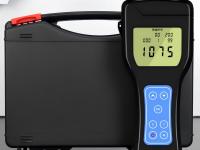
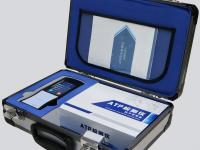
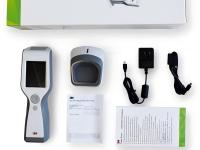
Handheld ATP Fluorescence Detectors
Rapid Bioluminescence Technology for Hygiene Monitoring
Instant assessment of microbial contamination and surface cleanliness:
- Detection Principle - Measures adenosine triphosphate (ATP), the universal energy molecule in all living cells | ATP reacts with luciferin-luciferase enzyme complex | Produces light proportional to ATP concentration | Light measured by luminometer in Relative Light Units (RLU)
- What ATP Detects - Total microbial biomass (bacteria, yeast, fungi, algae) | Does NOT differentiate between pathogens and non-pathogens | Indicates overall cleanliness and biological activity | Useful for trending and hygiene verification
- Measurement Range - Detection limit: 1-10 femtomoles ATP | Linear range: 1 to 100,000+ RLU | Corresponds to approximately 10³-10⁷ cells per sample | Adjustable pass/fail thresholds for different applications
- Sample Collection - Surface swab tests (100 cm² area) for pipes, tanks, filters | Water sample tests (100-1000 µL) using cuvettes | Results in 10-30 seconds after sample activation | Single-use, pre-calibrated test devices
- Advantages - Immediate results (10-30 seconds vs. 18-24 hours for culture) | No laboratory required, test at point-of-use | User-friendly, minimal training needed | Cost-effective for frequent monitoring | Trend analysis identifies problem areas | Real-time feedback for corrective actions
- Limitations - Does not identify specific pathogens | Cannot distinguish live vs. dead cells | Non-microbial ATP (food residues, biofilms) causes false positives | Lower sensitivity than PCR | Not suitable for regulatory compliance testing | Best used as screening tool
- Device Features - Portable handheld design (fits in palm) | LCD display with pass/warn/fail indicators | Bluetooth connectivity for data logging | Rechargeable battery (500+ tests per charge) | Data export to PC/smartphone via USB or wireless | Built-in test tracking and trend analysis | IP65 water-resistant housing
- Applications in Water Quality - Pre-operational hygiene checks (clean-in-place verification) | Biofilm detection on treatment plant surfaces | Filter integrity and cleanliness monitoring | Distribution system hygiene assessment | Cooling tower contamination screening | Bottled water plant sanitation verification | Membrane biofouling early detection | Post-disinfection effectiveness screening
- Interpretation Guidelines - Clean surface: <500 RLU | Caution/warning: 500-1,000 RLU | Fail/contaminated: >1,000 RLU | Thresholds vary by application (adjust to your baseline) | Trending is more important than absolute values | 2-3× increase indicates hygiene breakdown
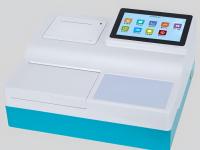
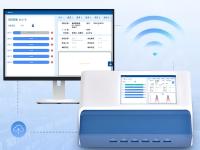
Benchtop Fluorescence PCR Machines
Real-Time Quantitative PCR for Definitive Pathogen Detection
Molecular detection and quantification with unparalleled sensitivity and specificity:
- Detection Principle - Polymerase chain reaction (PCR) amplifies target DNA/RNA sequences | Fluorescent probes or dyes bind to amplified product | Real-time fluorescence monitoring during amplification | Quantification by cycle threshold (Ct) value | Lower Ct = more target DNA present
- Technology Advantages - Detects specific pathogens (species and strain level) | Extremely sensitive (1-10 gene copies detectable) | Quantitative results (reports pathogen concentration) | Rapid turnaround (2-4 hours total, including extraction) | Simultaneous detection of multiple targets (multiplex PCR) | Differentiates live vs. dead with viability markers (optional)
- qPCR vs. Culture Methods - qPCR: 2-4 hours | Culture: 24-72 hours | qPCR: Detects non-culturable pathogens (VBNC state) | Culture: Only culturable organisms | qPCR: Quantitative (gene copies/mL) | Culture: Semi-quantitative (CFU/mL) | qPCR: Identifies species/strains | Culture: Requires additional tests | qPCR: Higher sensitivity | Culture: Viability confirmed
- Sample Input - Extracted DNA or RNA from water samples | 1-20 µL reaction volume (depends on kit) | Sample concentration via filtration required for low-biomass water | Internal controls verify extraction efficiency and detect inhibition
- Multiplexing Capability - Detect 2-6 targets simultaneously in single reaction | Example: E. coli + Salmonella + Campylobacter + internal control | Reduces reagent costs and time | Requires different fluorophores (FAM, HEX, ROX, Cy5) for each target
Complete Pathogen Detection Workflow
Step 1: Sample Collection & Concentration
Water Sample Volume: 100 mL-10L (depending on expected contamination)
Concentration Method: Membrane filtration (0.22-0.45 µm pore size) or centrifugation (wastewater)
For viruses: Ultrafiltration or PEG precipitation
For protozoa: IMS (immunomagnetic separation) for Cryptosporidium/Giardia (EPA Method 1623)
Sample Preservation: Process immediately or store at 4°C (≤24 hours) or -80°C (long-term)
Step 2: DNA/RNA Extraction
Method: Column-based or magnetic bead extraction (see DNA/RNA Extraction section)
Input: Filter membrane or concentrated pellet
Lysis: Enhanced lysis for tough organisms (bead-beating for protozoa)
Inhibitor Removal: Critical for environmental samples (humic acids, heavy metals)
Output: 50-200 µL purified DNA/RNA
Time: 30-60 minutes
Step 3: qPCR Setup & Amplification
Reaction Setup: Prepare master mix with primers, probes, and polymerase
Add 1-5 µL template DNA/RNA per reaction (20 µL total volume)
Include positive control (synthetic DNA), negative control (water), extraction control
Thermal Cycling: Initial denaturation (95°C, 3-10 min) | 40-45 cycles: Denaturation (95°C, 15 sec) → Annealing/Extension (60°C, 30-60 sec)
Optional: Melt curve analysis (60-95°C)
Time: 1-2 hours
Step 4: Data Analysis & Interpretation
Ct Value Interpretation: Ct <35: Positive detection | Ct 35-40: Weak positive (confirm with retest) | Ct >40 or no Ct: Negative
Quantification: Use standard curve (known concentrations) to calculate gene copies/reaction
Convert to gene copies/mL water (account for sample volume and extraction efficiency)
Quality Control: Verify internal control (extraction efficiency) | Check negative controls (no amplification) | Confirm positive control (expected Ct)
Reporting: Detected/Not Detected or Quantitative result (copies/L)
Detection Technology Comparison
| Feature | Handheld ATP Detector | Benchtop qPCR System | Traditional Culture (Reference) |
|---|---|---|---|
| Detection Time | 10-30 seconds | 2-4 hours (including extraction) | 18-72 hours |
| Specificity | Non-specific (total biomass) | Highly specific (species/strain level) | Specific (species level after biochemical tests) |
| Sensitivity | 10³-10⁴ cells | 1-10 gene copies (cells) | 1-10 CFU (after enrichment) |
| Quantification | Semi-quantitative (RLU) | Quantitative (gene copies/mL) | Quantitative (CFU/mL) |
| Viability Assessment | Live cells only (ATP degrades rapidly) | DNA from live and dead cells (viability PCR available) | Live, culturable cells only |
| Equipment Cost | $800-$4,000 | $15,000-$80,000 | $5,000-$30,000 (incubators, media, etc.) |
| Cost per Test | $3-$8 | $10-$30 (reagents + extraction) | $5-$20 (media, consumables, labor) |
| Skill Level Required | Minimal (5 min training) | Moderate-High (molecular biology skills) | Moderate (microbiological training) |
| Laboratory Required | No (portable, field use) | Yes (benchtop laboratory) | Yes (microbiology lab, BSL-2) |
| Throughput | High (100+ tests/hour) | Moderate-High (8-384 samples/run) | Moderate (limited by incubation time) |
| Regulatory Acceptance | Not for compliance (screening only) | Accepted for many applications (EPA, ISO methods available) | Gold standard (EPA, ISO, APHA methods) |
| Best Use Case | Hygiene monitoring, rapid screening, trending, CIP verification, biofilm detection | Pathogen identification, quantification, rapid outbreak response, surveillance, research | Regulatory compliance, viability confirmation, isolate recovery, antibiotic susceptibility testing |
Integrated Detection Strategy
Tiered Approach for Comprehensive Protection
Tier 1: Real-Time Screening (ATP)
• Daily or continuous monitoring at critical control points
• Immediate feedback on hygiene and contamination trends
• Triggers investigation when thresholds exceeded
• Cost-effective for high-frequency monitoring
Tier 2: Confirmatory Testing (qPCR)
• Triggered by ATP alarms or routine surveillance schedule
• Identifies specific pathogens within hours
• Quantifies pathogen load for risk assessment
• Guides targeted interventions
Tier 3: Regulatory Compliance (Culture)
• Confirms qPCR positives when required by regulations
• Provides viable isolates for further characterization
• Antibiotic susceptibility testing
• Strain typing for outbreak investigations
Example: Drinking Water Treatment Plant
Source Water Intake: Weekly qPCR for Cryptosporidium, Giardia, E. coli
Post-Filtration: Daily ATP monitoring of filter surfaces, weekly qPCR for turbidity breakthrough events
Post-Disinfection: ATP verification of residual biomass, qPCR for chlorine-resistant pathogens (Cryptosporidium)
Distribution System: Quarterly ATP surveys for biofilm development, qPCR for Legionella in dead-end zones
Consumer Taps: Monthly total coliform/E. coli culture (regulatory), qPCR follow-up on positives
Result: Multi-barrier protection with rapid detection and response
Why Choose Our Pathogen Detection Solutions?
Complete Technology Portfolio
ATP screening for rapid hygiene assessment. qPCR systems for definitive pathogen identification. Comprehensive assay kits for all priority waterborne pathogens. Integration with traditional culture methods. Scalable from field screening to high-throughput laboratory testing.
Validated Performance
qPCR assays validated against EPA and ISO reference methods. ATP devices calibrated to industry standards. Third-party performance verification available. Published data supporting accuracy and reliability. Used by municipal water utilities and regulatory agencies globally.
Rapid Results, Better Decisions
ATP results in seconds enable immediate corrective action. qPCR results in 2-4 hours vs. 24-72 hours for culture. Detect outbreaks early, before widespread exposure. Minimize water service interruptions with fast turnaround. Real-time data for process optimization.
Cost-Effective Monitoring
ATP screening reduces unnecessary confirmatory testing. qPCR eliminates false positives from culture methods. Lower labor costs with automation and rapid protocols. Prevent costly outbreaks through early detection. Flexible solutions scale with your budget and needs.
Expert Technical Support
Method development and optimization assistance. Training on ATP and qPCR operation and interpretation. Troubleshooting low sensitivity or false positives. Protocol customization for unique water matrices. Validation support for regulatory compliance. Access to applications scientists with water quality expertise.
Comprehensive Service
Equipment installation and commissioning. Operator training (ATP: 1 hour, qPCR: 2-3 days). Annual calibration and preventive maintenance. Consumable supply and inventory management. Emergency support for outbreak investigations. Data management and reporting software included.
Applications by Water Sector
| Sector | ATP Applications | qPCR Applications |
|---|---|---|
| Drinking Water Treatment | Filter cleanliness monitoring, CIP verification, membrane integrity, tank/pipe hygiene, post-disinfection verification | Source water pathogen screening (Crypto, Giardia), post-treatment verification, distribution system Legionella, regulatory compliance testing |
| Wastewater Treatment | Influent biomass monitoring, activated sludge health, effluent quality screening, biofilm control in collection systems | Influent/effluent pathogen quantification, ARG surveillance, wastewater-based epidemiology (SARS-CoV-2, norovirus), permit compliance |
| Bottled Water / Beverage | Production line hygiene, bottle washer effectiveness, filling equipment sanitation, storage tank monitoring, CIP validation | Source water safety verification, finished product pathogen screening (E. coli, Pseudomonas), spoilage organism detection |
| Healthcare Facilities | Plumbing fixture hygiene, water heater cleanliness, cooling tower biofilm detection, hemodialysis water quality | Legionella surveillance (showers, cooling towers), Pseudomonas in immunocompromised patient rooms, NTM detection (nontuberculous mycobacteria) |
| Recreational Water | Pool/spa water quality, filter backwash assessment, circulation system hygiene, surface sanitation verification | Crypto/Giardia in pools, E. coli/Enterococcus in beaches, Legionella in hot tubs, norovirus outbreak investigation |
| Food & Beverage Industry | Process water monitoring, equipment sanitation validation, rinse water quality, ice machine cleanliness | Pathogen verification (Salmonella, Listeria, E. coli), water ingredient safety, HACCP critical control point monitoring |
Need Help Choosing?
Our applications scientists have decades of combined experience in environmental Sample analysis. Contact us with your specific requirements.