


Next Generation Sequencing (NGS)
Unlock the complete genetic blueprint of microorganisms in water with cutting-edge DNA sequencing technologies. Next Generation Sequencing (NGS) has revolutionized water quality analysis, enabling comprehensive microbial community profiling, pathogen identification, antibiotic resistance monitoring, and genomic characterization at unprecedented scale and resolution. From targeted amplicon sequencing to whole genome assembly, our sequencing services deliver the insights you need for drinking water safety, wastewater surveillance, and environmental research.
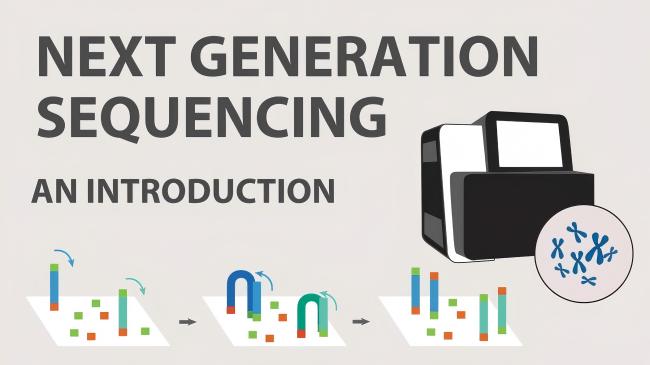
What is Next Generation Sequencing?
Evolution of DNA Sequencing
Understanding the progression from traditional to modern sequencing:
- Sanger Sequencing (1st Generation) - Developed in 1977, gold standard for decades | Reads one DNA fragment at a time (~800-1000 bp per read) | High accuracy (>99.9%) but low throughput | Still used for: PCR product verification, plasmid sequencing, targeted gene validation | Typical output: 1-96 sequences per run | Cost: ~$5-15 per sample | Turnaround: 24-48 hours
- Next Generation Sequencing (2nd Generation) - Introduced mid-2000s, massive parallel sequencing | Sequences millions of DNA fragments simultaneously | Revolutionary increase in throughput and cost reduction | Read lengths: 75-300 bp (Illumina) or 400-600 bp (Ion Torrent) | Accuracy: 99-99.9% | Typical output: 1 million to 6 billion reads per run | Cost: $0.01-0.10 per Mb | Applications: Amplicon sequencing (16S/18S/ITS), metagenomics, RNA-seq, whole genome sequencing
- Third Generation Sequencing (3rd Generation) - Emerged 2010s, single-molecule real-time sequencing | Ultra-long reads: 10,000-100,000+ bp (average 15-30 kb) | No PCR amplification required (direct DNA sequencing) | Lower per-base accuracy (85-99%) but improved with high coverage | Real-time sequencing (results during run) | Typical output: 10-50 Gb per run | Cost: $0.10-1.00 per Mb | Applications: Complete genome assembly, structural variant detection, full-length 16S sequencing, plasmid resolution
How NGS Works - Core Principles
Fundamental steps common to most NGS platforms:
- Step 1: Library Preparation - Fragment DNA into smaller pieces (or use PCR amplicons) | Attach adapter sequences to DNA fragments | Adapters enable binding to sequencing platform | Quality control: verify fragment size distribution and concentration
- Step 2: Cluster Generation (2nd Gen) or Single-Molecule Loading (3rd Gen) - 2nd Gen: Amplify each fragment into clusters of identical molecules on flowcell surface | 3rd Gen: Load individual DNA molecules directly into sequencing cells (no amplification) | Creates templates ready for sequencing reactions
- Step 3: Sequencing by Synthesis - 2nd Gen: Fluorescently labeled nucleotides added one at a time, camera captures signal | 3rd Gen: Real-time detection of nucleotide incorporation by polymerase | Each base addition recorded and converted to sequence data
- Step 4: Data Analysis - Convert raw signals (images or electrical currents) to base calls (A, T, G, C) | Quality filtering removes low-quality reads | Align reads to reference genomes or assemble de novo | Taxonomic classification, variant calling, or functional annotation
Sequencing Technology Comparison
| Feature | 1st Generation (Sanger) |
2nd Generation (Illumina, Ion Torrent) |
3rd Generation (PacBio, Nanopore) |
|---|---|---|---|
| Read Length | 800-1,000 bp | 75-600 bp | 10,000-100,000+ bp (avg 15-30 kb) |
| Accuracy | >99.9% | 99-99.9% | 85-99% (99%+ with high coverage) |
| Throughput per Run | 1-96 reads (~50-100 kb total) |
1M-6B reads (1-3,000 Gb total) |
100K-10M reads (10-300 Gb total) |
| Run Time | 1-3 hours | 4 hours-5 days | 30 min-72 hours (real-time analysis possible) |
| Cost per Megabase | $5,000-$20,000 | $0.01-$0.10 | $0.10-$1.00 |
| Sample Multiplexing | Limited (1-96 samples) | Excellent (96-384+ samples/run) | Moderate (1-96 samples/run) |
| PCR Amplification | Required | Required for library prep | Not required (direct sequencing) |
| GC Bias | Minimal | Moderate (PCR introduces bias) | Minimal (no PCR) |
| Equipment Cost | $50K-$150K | $100K-$1M+ | $10K-$500K |
| Best Applications | PCR product verification Plasmid sequencing Targeted gene sequencing SNP validation |
16S/18S amplicon sequencing Metagenomics RNA-seq Whole genome sequencing High-throughput screening |
Complete genome assembly Full-length 16S/18S Structural variants Plasmid resolution Phage genomics |
| Main Advantage | Highest per-base accuracy Simple workflow Proven reliability |
Lowest cost per base Highest throughput Mature bioinformatics |
Longest reads Complete genome assembly Real-time analysis |
| Main Limitation | Very low throughput High cost per base Not suitable for discovery |
Short reads limit assembly PCR bias Difficult to resolve repeats |
Higher error rate Higher cost per base than 2nd gen Lower throughput for small projects |
Second Generation Sequencing Services
Illumina Platform - Industry Standard for High-Throughput
Proven technology for diverse water quality applications:
- Available Platforms - MiSeq (benchtop, 1-25M reads, 15 Gb output) | NextSeq (mid-scale, 130-400M reads, 120 Gb) | NovaSeq (production-scale, 1-6B reads, 3,000 Gb) | iSeq (ultra-compact, 1-4M reads, 1.2 Gb)
- Read Configurations - Single-end (SE): 75 bp, 100 bp, 150 bp | Paired-end (PE): 2×75 bp, 2×150 bp, 2×250 bp | Paired-end provides better assembly and taxonomic resolution
- Sample Multiplexing - Barcode up to 384 samples in single run | Cost-effective for large projects | Dual-indexing prevents barcode hopping
- Chemistry - Sequencing-by-synthesis with reversible terminators | Four-color imaging system | High accuracy (99.9% at Q30 for >80% of bases)
- Typical Applications - 16S rRNA amplicon sequencing (bacterial communities) | 18S rRNA and ITS sequencing (eukaryotes, fungi) | Shotgun metagenomics (microbial function and taxonomy) | RNA-seq (gene expression, metatranscriptomics) | Targeted resequencing | Small genome assembly (viruses, plasmids)
MGI Platform - Cost-Effective High-Throughput Alternative
Innovative DNB sequencing technology from China:
- Available Platforms - DNBSEQ-G400 (mid-throughput, 300 Gb) | DNBSEQ-T7 (ultra-high-throughput, 6,000 Gb) | Compatible with Illumina library prep protocols
- Technology - DNA Nanoball (DNB) sequencing | Combinatorial probe-anchor synthesis (cPAS) | Patterned array flowcells reduce reagent costs
- Cost Advantage - 30-50% lower per-base cost than Illumina | Ideal for large-scale surveillance programs | Maintained accuracy and quality
- Applications - Same as Illumina platforms | Increasingly adopted for wastewater epidemiology | Large metagenomics projects
2nd Generation Service Packages
16S/18S/ITS Amplicon Sequencing
Service Includes: Library preparation from PCR amplicons, paired-end sequencing (2×250 bp or 2×300 bp), demultiplexing and quality filtering, taxonomic classification, diversity analysis (alpha and beta), differential abundance testing.
Typical Output: 30,000-50,000 reads per sample
Turnaround: 2-3 weeks from sample receipt
Applications: Microbial community profiling, pathogen screening, source tracking
Shotgun Metagenomics
Service Includes: Library prep from genomic DNA, paired-end sequencing (2×150 bp), quality control, taxonomic profiling, functional annotation (KEGG, COG), antibiotic resistance gene detection, custom analysis.
Typical Output: 10-50 million reads per sample
Turnaround: 3-4 weeks
Applications: Functional metagenomics, ARG surveillance, strain-level identification
Metatranscriptomics (RNA-seq)
Service Includes: rRNA depletion (optional), cDNA library prep, paired-end sequencing, transcript assembly, gene expression quantification, functional pathway analysis.
Typical Output: 20-40 million reads per sample
Turnaround: 3-4 weeks
Applications: Active microbial function, gene expression profiling, metabolic activity
Bacterial Genome Sequencing
Service Includes: Library prep, high-coverage sequencing (100-200×), de novo assembly, genome annotation, quality metrics (N50, completeness).
Typical Output: Complete draft genome (10-50 contigs)
Turnaround: 2-3 weeks
Applications: Isolate characterization, comparative genomics, outbreak investigations
Third Generation Sequencing Services
Available through our Korea and Singapore facilities
PacBio HiFi Sequencing - Long Reads with High Accuracy
Single-molecule real-time (SMRT) sequencing for complete genome resolution:
- Available Platforms - PacBio Sequel IIe (8M ZMWs, 4,000 Gb output) | PacBio Revio (25M ZMWs, 15,000 Gb output, latest generation)
- Technology - Zero-mode waveguides (ZMWs) enable single-molecule sequencing | Circular consensus sequencing (CCS) produces HiFi reads | Each molecule read multiple times for error correction | Real-time observation of DNA polymerase incorporating nucleotides
- Read Length & Accuracy - HiFi reads: 10-25 kb average length | Accuracy: >99.9% (Q30+) after consensus | Raw reads can extend to >100 kb
- Key Advantages - Long reads enable complete genome assembly (chromosome-level) | No PCR amplification (no GC bias) | Detects base modifications (methylation) | Resolves repetitive regions impossible with short reads | Single contig bacterial genomes achievable
- Sample Requirements - High molecular weight DNA (>30 kb fragments) | Input: 5-10 µg DNA at >100 ng/µL | Purity: A260/280 = 1.8-2.0, A260/230 >2.0
- Typical Applications - Complete bacterial genome assembly (single chromosome) | Plasmid identification and complete assembly | Full-length 16S rRNA sequencing (1,500 bp, species-level ID) | Structural variant detection | Phage genome sequencing | Mobile genetic element characterization
- Service Locations - Korea facility: PacBio Sequel IIe and Revio | Singapore facility: PacBio Sequel IIe
Oxford Nanopore Sequencing - Ultra-Long Reads & Real-Time Analysis
Revolutionary nanopore technology for on-demand sequencing:
- Available Platforms - MinION (portable, USB-powered, 10-50 Gb) | GridION (benchtop, 5 flowcells, 250 Gb) | PromethION (production-scale, 48 flowcells, 14,000 Gb)
- Technology - DNA strand passes through biological nanopore protein | Electrical current changes as different bases pass through | Direct sequencing of native DNA (no synthesis required) | Real-time basecalling and analysis during run
- Read Length & Accuracy - Read lengths: Routinely 20-100 kb, can exceed 1-2 Mb | Accuracy: 95-99% (raw reads), >99% with high coverage (30-50×) | Improving with updated basecalling algorithms
- Unique Capabilities - Ultra-long reads (>100 kb common, >1 Mb possible) | Real-time sequencing (results available during run) | Portable sequencing (MinION for field work) | Direct RNA sequencing (no cDNA conversion) | Detects DNA modifications (methylation, hydroxymethylation)
- Sample Requirements - Ultra-high molecular weight DNA (>50 kb optimal) | Input: 1-5 µg DNA | Gentle handling essential (no vortexing, wide-bore tips)
- Rapid Sequencing Option - Library prep in <10 minutes (rapid barcoding kit) | Sequencing starts immediately | Results available in 30 minutes to 2 hours | Ideal for outbreak response and urgent diagnostics
- Typical Applications - Complete bacterial genome assembly (telomere-to-telomere) | Large plasmid and megaplasmid sequencing | Full-length 16S rRNA (species and strain differentiation) | Metagenome assembly (resolve complex communities) | Rapid pathogen identification | Direct RNA sequencing | Epigenetic modifications (methylation patterns) | Field sequencing (portable MinION)
- Service Locations - Korea facility: PromethION 48, GridION, MinION | Singapore facility: PromethION 24, GridION
Hybrid Sequencing - Best of Both Worlds
Combine 2nd and 3rd generation for optimal results:
- Strategy - Short reads (Illumina) provide high accuracy for error correction | Long reads (PacBio/Nanopore) provide complete assembly scaffolding | Hybrid assembly algorithms combine both datasets
- Typical Approach - Illumina 2×150 bp (100-150× coverage) + PacBio HiFi (50× coverage) | Or: Illumina 2×150 bp + Nanopore (30-50× coverage)
- Results - Closed, circular bacterial genomes (chromosome + plasmids) | Accuracy >99.99% (Q40+) | Complete resolution of repetitive regions | Optimal for publication-quality reference genomes
- Applications - High-quality reference genomes for novel bacterial species | Complete plasmid characterization in outbreak strains | Definitive genome assembly for comparative genomics
3rd Generation Service Packages
Complete Bacterial Genome Assembly (PacBio HiFi)
Service Includes: High molecular weight DNA QC, HiFi library preparation, PacBio Revio sequencing (50-100× coverage), hybrid assembly (if Illumina data provided), genome polishing, annotation, plasmid identification, quality report (N50, completeness, contamination).
Deliverables: Closed circular genome (FASTA), annotation files (GFF, GenBank), QC metrics, assembly report
Turnaround: 3-4 weeks from high-quality DNA receipt
Typical Results: Single chromosome contig, 1-10 plasmid contigs, >99.9% accuracy
Ultra-Long Read Genome Assembly (Nanopore)
Service Includes: Ultra-HMW DNA QC, rapid or standard library prep, PromethION sequencing (30-50× coverage), de novo assembly, polishing (with Illumina if provided), annotation, plasmid detection, quality metrics.
Deliverables: Assembled genome (FASTA), annotations, assembly graph, methylation data (optional)
Turnaround: 2-3 weeks (rapid service available: 1 week)
Typical Results: Complete genomes with reads >50 kb, plasmids fully resolved
Full-Length 16S rRNA Sequencing
Service Includes: Full-length 16S PCR (1,500 bp), PacBio or Nanopore library prep, sequencing, CCS or high-accuracy basecalling, species-level taxonomic assignment, phylogenetic tree construction.
Deliverables: Full-length 16S sequences, species identification (>99% identity), diversity analysis
Turnaround: 2 weeks
Advantages: Species-level resolution (vs. genus-level for V3-V4), strain differentiation possible, resolves closely related species
Metagenomic Long-Read Assembly
Service Includes: HMW DNA library prep, long-read sequencing (PacBio or Nanopore), metagenomic assembly, genome binning (MAGs), taxonomic classification, functional annotation, optional strain-level analysis.
Deliverables: Metagenome-assembled genomes (MAGs), taxonomic profiles, functional pathways, completeness metrics
Turnaround: 4-5 weeks
Applications: Resolve complex communities, recover near-complete genomes, characterize strain diversity
Regional Sequencing Facilities
Korea Sequencing Center (Seoul)
Location: Seoul, South Korea
2nd Generation Platforms: Illumina NovaSeq 6000, MiSeq, NextSeq 2000 | MGI DNBSEQ-T7
3rd Generation Platforms: PacBio Sequel IIe, PacBio Revio | Oxford Nanopore PromethION 48, GridION, MinION
Specializations: High-throughput bacterial genome sequencing, metagenomic projects, full-length 16S/18S sequencing, hybrid assembly services
Certifications: ISO 17025 accredited, CLIA-certified laboratory
Sample Submission: Courier service across CPTPP nations, cold-chain maintained, customs clearance assistance
Languages: Korean, English, Japanese, Mandarin
Contact: korea-sequencing@example.com
Singapore Sequencing Center
Location: Singapore Science Park
2nd Generation Platforms: Illumina NovaSeq 6000, NovaSeq X Plus, MiSeq | MGI DNBSEQ-G400
3rd Generation Platforms: PacBio Sequel IIe | Oxford Nanopore PromethION 24, GridION
Specializations: Clinical water pathogen genomics, wastewater surveillance, viral metagenomics, rapid Nanopore sequencing, RNA-seq
Certifications: ISO 15189, CAP accredited, Singapore HSA approved
Sample Submission: Regional hub for Southeast Asia, express shipping available, import permits handled
Languages: English, Mandarin, Malay, Tamil
Contact: singapore-sequencing@example.com
Choosing Your Sequencing Technology
| Your Goal | Recommended Technology | Reason |
|---|---|---|
| Profile bacterial community in water samples | 2nd Gen: 16S V3-V4 amplicon sequencing (Illumina MiSeq) | Cost-effective, high-throughput, genus-level identification sufficient for most applications |
| Identify bacteria to species level | 3rd Gen: Full-length 16S sequencing (PacBio or Nanopore) | Full 1,500 bp 16S sequence provides species and even strain-level resolution |
| Characterize microbial community function | 2nd Gen: Shotgun metagenomics (Illumina NovaSeq) | High depth needed for functional genes, cost-effective for 50M+ reads per sample |
| Monitor antibiotic resistance genes in wastewater | 2nd Gen: Targeted metagenomics or shotgun (Illumina) | High accuracy needed for ARG identification, cost-effective for surveillance |
| Assemble complete bacterial genome from isolate | 3rd Gen: PacBio HiFi or Nanopore (Korea/Singapore) | Long reads resolve repeats and close genomes, single chromosome assembly achievable |
| Identify plasmids in pathogenic bacteria | 3rd Gen: Hybrid (Illumina + PacBio or Nanopore) | Long reads resolve plasmids completely, short reads provide high accuracy |
| Outbreak investigation (rapid results needed) | 3rd Gen: Nanopore rapid sequencing (Singapore facility) | Results in 24-48 hours, real-time analysis, portable if needed |
| Wastewater viral surveillance (SARS-CoV-2) | 2nd Gen: Targeted amplicon or metagenomics (Illumina) | High sensitivity, variant detection, cost-effective for routine surveillance |
| Discover novel bacterial species in environment | 3rd Gen: Hybrid assembly (best quality reference genome) | Publication-quality genome required, complete assembly for species description |
| Verify PCR product or plasmid sequence | 1st Gen: Sanger sequencing | High accuracy, simple workflow, cost-effective for 1-96 samples |
| Large-scale surveillance (100+ samples/week) | 2nd Gen: Illumina or MGI high-throughput platforms | Lowest per-sample cost, high multiplexing capacity, standardized protocols |
Sample Requirements & Submission
DNA/RNA Quality Requirements
2nd Generation Sequencing:
• DNA: 100 ng-1 µg total, >20 ng/µL concentration
• Fragment size: >200 bp (can work with degraded DNA)
• Purity: A260/280 = 1.8-2.0, A260/230 >2.0
• RNA: 100 ng-1 µg, RIN >7.0
3rd Generation Sequencing:
• DNA: 5-10 µg, >100 ng/µL concentration
• High molecular weight (>30 kb for PacBio, >50 kb for Nanopore)
• Purity: A260/280 = 1.8-2.0, A260/230 >2.2
• No vortexing, use wide-bore tips, minimal freeze-thaw
Sample Shipping
Domestic Shipping (within country):
DNA: Room temperature (short transit) or ice packs
RNA: Dry ice required, ship overnight
International Shipping:
DNA: Dry ice for long-read samples (HMW DNA)
RNA: Dry ice mandatory, customs documentation provided
Tracking & Support:
Real-time shipment tracking, customs clearance assistance, import permits arranged, cold-chain monitoring logs
Metadata Submission
Complete sample information form (Excel template provided). Include: sample ID, collection date/location, water type, extraction method, DNA/RNA concentration and quality metrics (Qubit, NanoDrop, Bioanalyzer). Research objectives and downstream analysis requirements. Preferred bioinformatics analysis (standard or custom).
Turnaround Times
Standard Service: 2-4 weeks from sample receipt
Rush Service: 1-2 weeks (additional 30% fee)
Ultra-Rapid (Nanopore only): 24-72 hours (outbreak response)
Times include library prep, sequencing, and standard bioinformatics. Custom analysis may extend timeline by 1-2 weeks.
Bioinformatics & Data Analysis
Standard Analysis Package (Included)
Amplicon Sequencing (16S/18S/ITS): Quality control and filtering, taxonomic classification (SILVA/Greengenes/UNITE), alpha diversity metrics (Shannon, Simpson, Chao1), beta diversity (PCoA, NMDS), rarefaction curves, taxonomic bar charts and heatmaps, core microbiome analysis.
Metagenomics: Quality control, taxonomic profiling (Kraken2, MetaPhlAn), functional annotation (KEGG, COG, CAZy), antibiotic resistance gene detection (CARD, ARG-ANNOT), virulence factor identification, metabolic pathway reconstruction.
Genome Assembly: De novo assembly, assembly QC (N50, L50, completeness), genome annotation (Prokka, RAST), functional gene prediction, comparative genomics (optional).
Advanced Custom Analysis (Optional)
Statistical Analysis: Differential abundance testing (DESeq2, LEfSe), multivariate statistics (PERMANOVA, ANOSIM), machine learning classification, time-series analysis, source tracking algorithms (SourceTracker).
Specialized Analysis: Genome-scale metabolic modeling, pan-genome analysis, phylogenomics, strain-level tracking, mobile genetic element detection, CRISPR array analysis, prophage identification, plasmid characterization.
Custom Workflows: Integration with your existing data, custom database searches, publication-ready figures, statistical consultation.
Data Delivery & Storage
Data Deliverables
Raw sequencing data (FASTQ files, demultiplexed). Processed data (quality-filtered, trimmed). Analysis results (taxonomy tables, functional annotations). Summary statistics and quality metrics. Interactive HTML reports with visualizations. Metadata and methods documentation. Publication-ready figures (PDF, PNG).
Data Access & Storage
Secure cloud-based data portal (download link valid 6 months). Long-term data storage (5 years included in service fee). Extended storage available (additional cost). API access for programmatic data retrieval. NCBI SRA submission assistance. Data privacy and confidentiality agreements (NDA available).
Why Choose Our NGS Services?
Technology Leadership
Access to all major sequencing platforms (Illumina, MGI, PacBio, Nanopore). State-of-the-art 3rd generation sequencing in Korea and Singapore. Latest platform updates and chemistry improvements. Expertise in hybrid sequencing strategies. Continuous investment in new technologies.
Water Quality Expertise
Specialized protocols for environmental water samples. Experience with low-biomass drinking water. Optimized workflows for high-inhibitor wastewater. Validated methods for pathogen detection. Published research in water quality journals. Collaboration with regulatory agencies.
Quality Assurance
ISO 17025 accredited facilities (Korea, Singapore). Rigorous QC at every step (library QC, sequencing QC, bioinformatics QC). Positive and negative controls in every run. Lot-specific quality reports. Third-party proficiency testing. Validated for regulatory applications.
Comprehensive Support
Free consultation on study design and sequencing strategy. Expert guidance on sample preparation and QC. Customs and shipping support for international samples. Dedicated project managers for large studies. Bioinformatics consultation and interpretation. Publication support and co-authorship consideration for novel findings.
Competitive Pricing
Transparent all-inclusive pricing (no hidden fees). Volume discounts for large projects (50+ samples). Academic and government pricing available. Flexible payment terms for international clients. Cost-effective MGI platform option. Multi-project discounts for ongoing collaborations.
Regional Accessibility
Two strategically located facilities (Korea, Singapore). Serve all CPTPP nations efficiently. Reduced shipping time and costs. Multilingual support teams. Local regulatory knowledge. Time zone coverage for 24/7 communication. Regional partnerships for sample collection.
Getting Started
Step 1: Free Consultation
Contact our sequencing team to discuss your project. We'll recommend the optimal sequencing platform and depth based on your research questions, sample type, and budget. Receive a detailed quote and timeline. Sample preparation protocols and quality guidelines provided.
Step 2: Sample Preparation & QC
Extract DNA/RNA using our recommended protocols. Perform quality control (concentration, purity, integrity). If needed, send samples to us for QC assessment before sequencing. We can also perform DNA/RNA extraction from your water samples (additional fee).
Step 3: Sample Submission
Ship samples to Korea or Singapore facility (we handle customs). Real-time tracking and receipt confirmation. Sample QC performed upon arrival. Library preparation begins within 2-3 business days. Regular progress updates throughout sequencing.
Step 4: Data Analysis & Delivery
Sequencing data generated and quality-checked. Standard bioinformatics analysis performed. Results delivered via secure data portal. Results interpretation consultation call included. Custom analysis available upon request. Publication support and continued collaboration welcomed.
Need Help Choosing?
Our applications scientists have decades of combined experience in environmental Sample analysis. Contact us with your specific requirements.